Decoding disease biology at industrial scale. By fusing automated high-throughput wet labs with billions of multimodal cellular parameters, we transform serendipitous discovery into predictable computation.
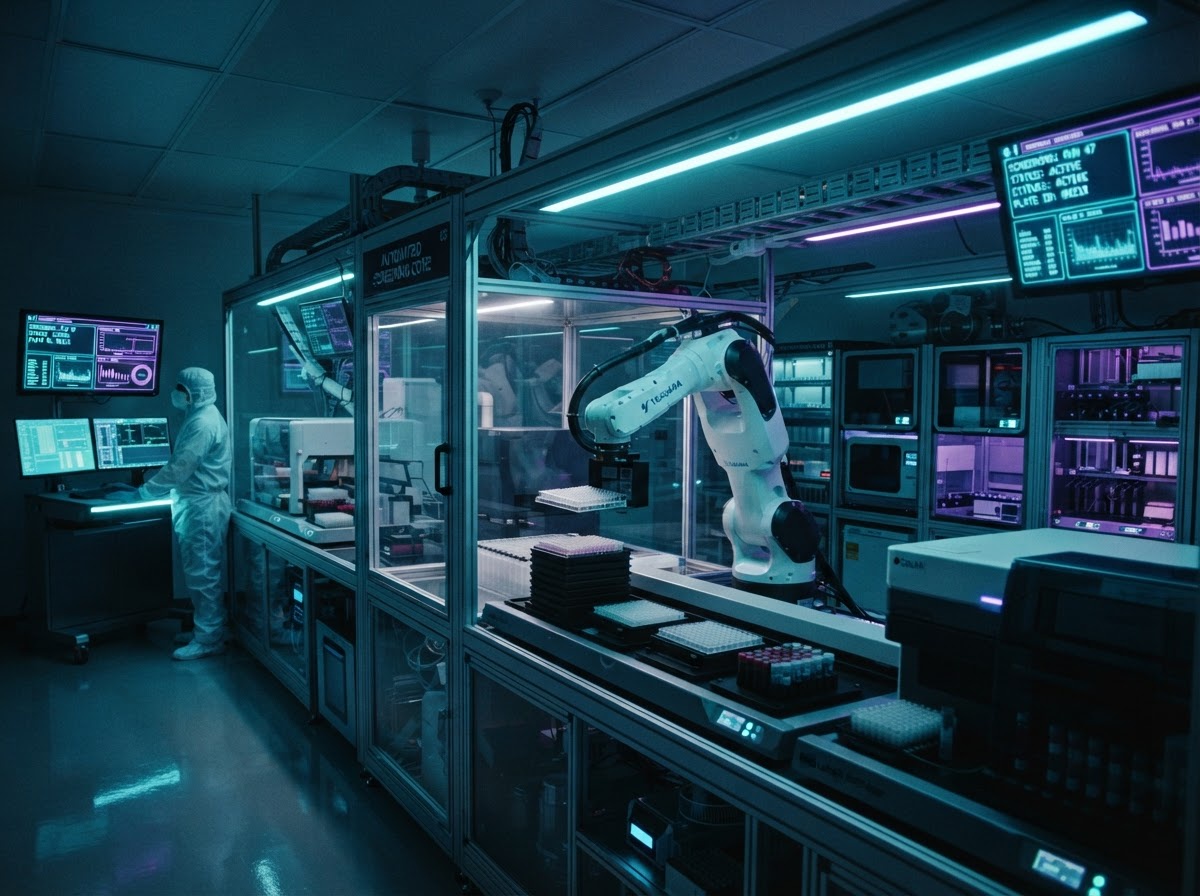
The Recursion Operating System replaces serendipitous discovery with an industrial flywheel. Automated robotic wet labs generate petabytes of high-content biological data to train our BioHive supercomputers, continuously refining predictive in silico models.
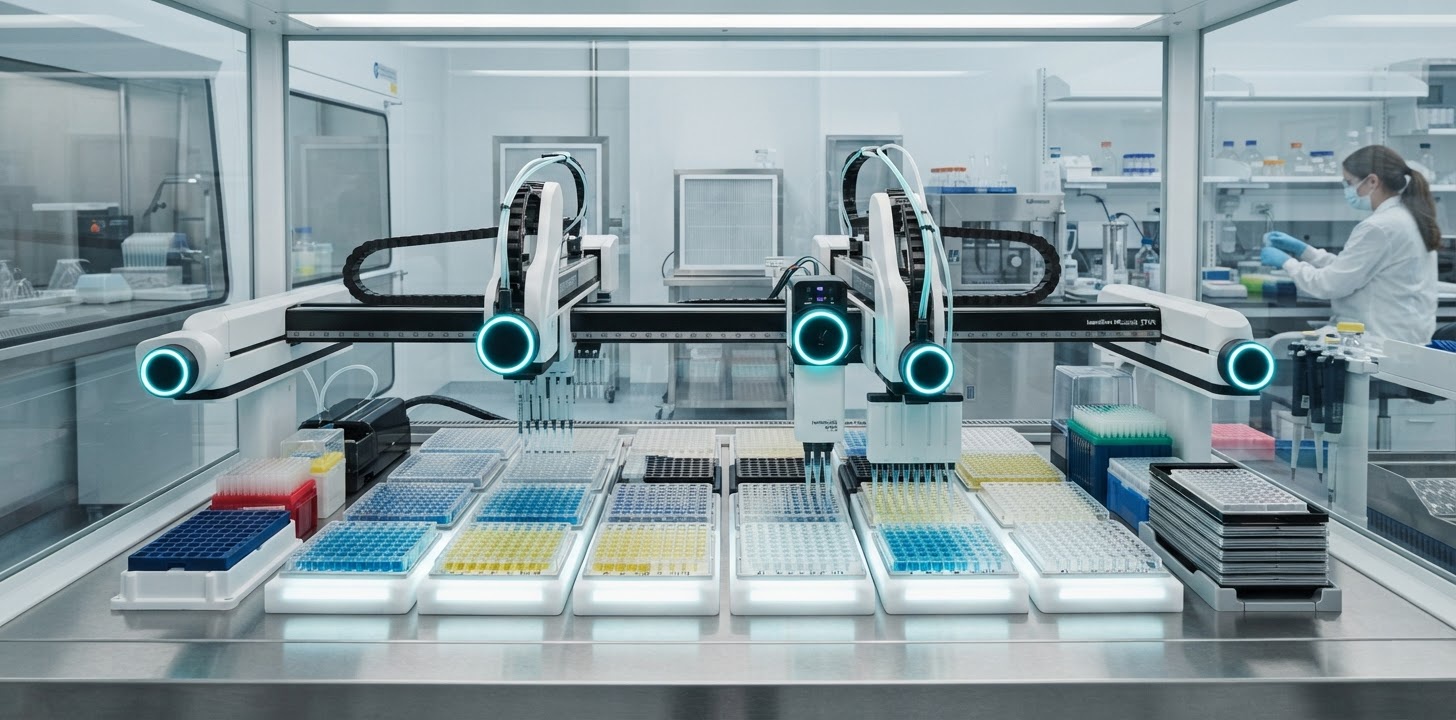
Robotic liquid handlers run up to 2.2M microscopic cell assays weekly with gene knockouts and chemical perturbations.
Standardized image acquisition captures cellular morphology and transcriptomic states across 25+ PB of data.
Foundation models parse structural signatures to identify untargeted disease mechanisms and infer chemical activity.
Generative candidates loop right back into wet lab assay confirmation, continuously validating and improving model fidelity.
Powered by state-of-the-art GPU clusters, BioHive-2 calculates relational maps of biology and chemistry. It transforms raw phenotypic imagery into multidimensional vector embeddings, exposing causal connections invisible to human researchers.
Instead of testing one isolated hypothesis at a time, our phenomics engine tests every perturbation against unbiased cellular markers. We evaluate millions of chemical compounds against complex disease models simultaneously.
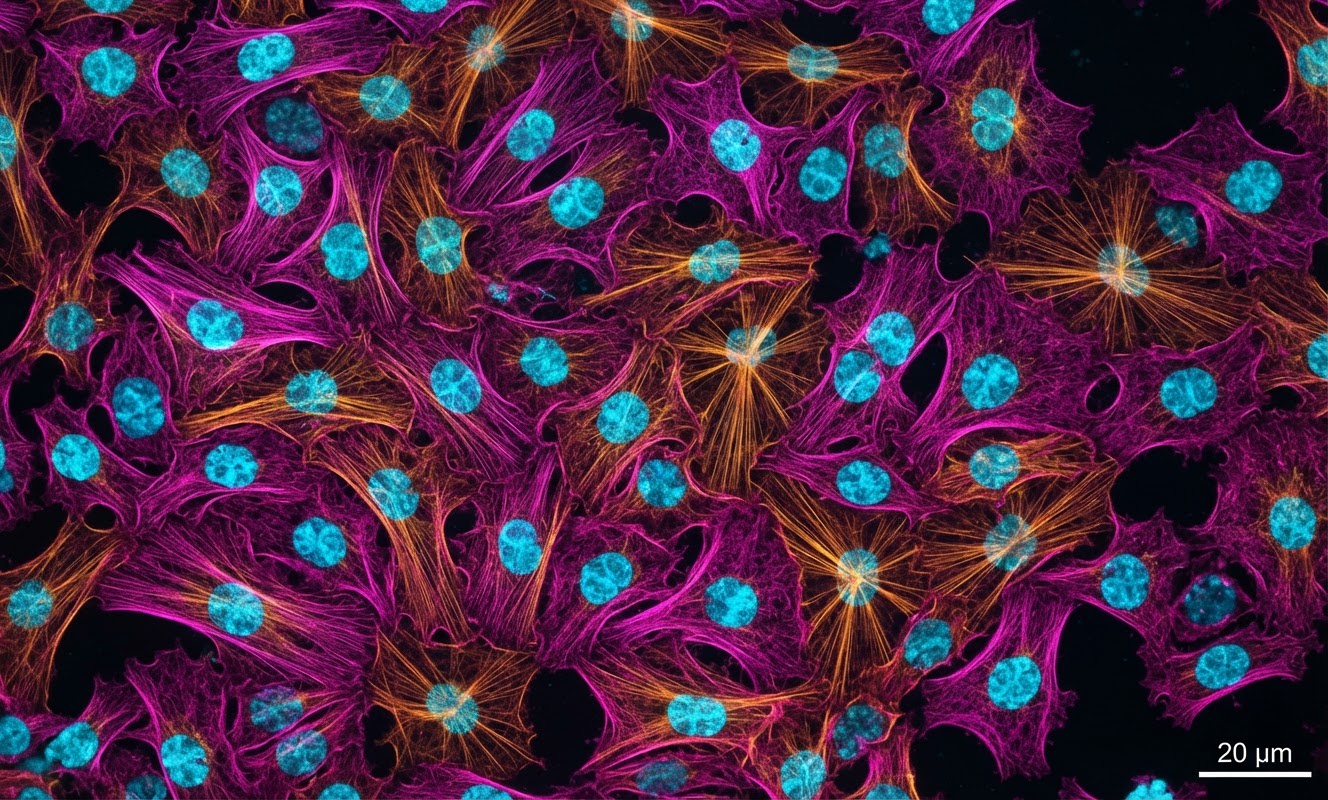
Fluorescence microscopy staining six cellular sub-compartments to detect subtle phenotypic shifts.
In silico molecular generation conditioned to reverse disease phenotypes while optimizing ADMET parameters.
Machine learning algorithms unmask multi-target polypharmacology and off-target liabilities early.
Proprietary and partnered candidates accelerated through the Recursion OS, spanning oncology, rare monogenic diseases, and neuroscience.
Try searching for alternative therapeutic areas or compound designations.
We capture biology in its full uncompressed complexity. By treating cell morphology as a computable information layer, our neural networks isolate subtle therapeutic signals across billions of phenotypic features.
Simultaneously tagging 8 cellular sub-structures (nucleus, mitochondria, endoplasmic reticulum, actin, golgi, RNA, plasma membrane) to generate rich, unbiased morphological fingerprint matrices for every chemical or genetic intervention.
Trained on hundreds of millions of biological images without human labels. Phenom-2 maps raw pixels directly into low-dimensional latent embeddings, revealing cryptic disease states and predicting chemical mode-of-action in seconds.
Generative diffusion models construct novel chemical scaffolds conditioned specifically to reverse diseased morphology vectors toward healthy baselines, simultaneously multi-task optimizing ADMET and selectivity.
Standard drug discovery measures only target binding affinity in isolation. Our platform evaluates global cellular health, identifying molecules that rescue cellular dysfunction across thousands of simultaneous morphological checkpoints.
Drug discovery can no longer rely on artisanal manual pipetting. We engineered fully autonomous bio-manufacturing cleanrooms executing millions of standardized cellular assays weekly, fueling computational learning loops with pristine high-dimensional data.
Touchless soundwave fluid transfer handles fragile human biological reagents and compound solutions at nanoliter precision without tip shearing, cross-contamination, or plastic consumables waste.
Multi-axis robotic arms route 1,536-well and 384-well microplates continuously between computerized incubators, automated stainers, and laser confocal high-throughput automated microscopes.
Raw microscopy data feeds real-time into local edge servers for feature normalizations before streaming directly to BioHive supercomputers, ensuring rapid in silico validation cycles within 72 hours.
Advancing precision medicines through patient-centric, biomarker-stratified clinical trials. Access protocol synopses, site maps, and screening inclusion criteria for investigators and participants.
Compound: REC-994 // Cerebral Cavernous Malformation (CCM)
A randomized, double-blind, placebo-controlled clinical trial evaluating the safety, pharmacokinetics, and efficacy of REC-994 in patients with symptomatic CCM lesion burden.
Compound: REC-2282 // Neurofibromatosis Type 2 (NF2)
Multi-center Phase 2/3 adaptive clinical trial to assess the safety and antitumoral activity of orally administered REC-2282 in participants with progressive NF2 meningiomas.
Compound: REC-4881 // Familial Adenomatous Polyposis (FAP)
Evaluating the regression of duodenal and lower gastrointestinal polyps in adult patients with classical or attenuated FAP receiving the allosteric MEK1/2 modulator REC-4881.
Our specialized clinical team provides secure transfer of study documentation, pre-screening inclusion guidance, and dedicated site coordinators for participating hospitals.
We partner with leading global pharmaceutical innovators to solve intractable target biology, optimize lead generation, and accelerate transformative therapies from computational hits to clinic.
Multi-Year Strategic Collaboration
Leveraging the Recursion OS to decode novel therapeutic targets across 40 programs spanning neuroscience and oncology indications, unlocking phenotypes in previously inaccessible disease spaces.
Target Discovery & Small Molecules
Fusing human cellular disease models with automated high-throughput phenotypic screening to systematically uncover and de-risk novel targets driving pulmonary and cardiac fibrotic mechanisms.
Generative Biology AI Co-Development
Direct collaboration accelerating foundational biological models, optimizing Phenom-2 on NVIDIA DGX SuperPOD systems, and deploying generative models through NVIDIA BioNeMo microservices.
Whether accessing our proprietary Phase 2 clinical assets or initiating new multi-target discovery pipelines using our robotic facilities and foundational AI models, we tailor structures to partner strategic objectives.
Interrogate intractable disease pathways using whole-genome CRISPR and massive high-content imaging datasets.
Acquire global co-development and commercialization rights for active clinical oncology and rare-disease molecules.
Design bespoke chemical scaffolds to navigate tricky target pharmacology with high selectivity and drug-like properties.
Screen external proprietary libraries through Recursion automated assays with algorithmic target deconvolution.
Real-time financial telemetry, SEC regulatory disclosures, upcoming conference webcasts, and corporate governance records for shareholders and institutions.
Conference call and live audio webcast with Q&A session
Fireside chat with CEO Chris Gibson, Ph.D.
Corporate presentation and pipeline milestone readouts
Empirical validation of our digital biology platform across leading scientific journals, machine learning conferences, and publicly released benchmark datasets for the computational biology community.
Demonstrating how unbiased computer vision models applied to 5-channel cell painting across 2.2 million genetic and chemical perturbations uncover previously unknown functional connections between disparate signaling pathways.
Introduces a vision transformer architecture pre-trained on 400M microscopy images, achieving state-of-the-art representation learning on cell morphology and genetic knockout classification.
Preclinical discovery and validation framework behind REC-4881, revealing mucosal restoration mechanisms in APC-deficient adenomatous polyposis organoid models.
Novel spherical contrastive learning algorithms to mathematically disentangle non-biological experimental plate noise from genuine phenotypic drug effects.
Demonstrating systematic prediction of secondary target engagement and unpredicted in vivo toxicities from early high-throughput in vitro cellular profiles.
Recursion has open-sourced hundreds of gigabytes of fluorescent cell imaging datasets to advance academic ML research. Used by universities and AI researchers globally for competitive benchmarks.